Short Description

What is Parsley (dry leaf)?

Parsley or dry leaf is a seasoning herb used in cooking almost in every cuisine. Fresh parsley leaves are dried to get that herb. The drying process ensures it get beautiful fragrance which also increases its shelf life.

The drying process usually involves the use of air drying, shade drying, or low-heat dehydrators. Even after drying, the leaves maintain their nutritional value, vital oils, and green color. To make storing and using dried parsley leaves easier, they are then crushed or coarsely chopped.

Dried parsley adds flavor and freshness to soups, sauces, and salads. It has a stronger flavor than fresh parsley. It is lightweight, portable, and stored in airtight containers.

How is Parsley (dry leaf) cultivated?

To grow parsley, the seeds are planted directly in the ground. Germination usually takes 2 to 4 weeks.

The plant prefers cool weather and little sunlight. Regular irrigation is essential to maintain the moisture of soil. Farmers regularly clear weeds to encourage healthy parsley growth.

Leaves are gathered when plants achieve maturity, which usually happens after 70 to 90 days. They are then cleaned, dried, and made into dried parsley.
Product Description

Benefits of using Parsley (dry leaf)

  • Rich in vitamins A, C, and K.
  • Boosts immunity and strengthens bones.
  • Packed with antioxidants.
  • Improves digestion naturally.
  • Supports healthy kidney function.
  • Adds flavour with low calories.
  • Regulates blood pressure and supports heart health.
  • Easy to store and use anytime.

How to use Parsley (dry leaf)?

  • Sprinkle on soups, stews, and curries.
  • Add to pasta, rice, or veggies.
  • Mix in dressings, dips, and sauces.
  • Use as garnish for meat, fish, or eggs.

What is Parsley (dry leaf)?

Parsley or dry leaf is a seasoning herb used in cooking almost in every cuisine. Fresh parsley leaves are dried to get that herb. The drying process ensures it get beautiful fragrance which also increases its shelf life.

The drying process usually involves the use of air drying, shade drying, or low-heat dehydrators. Even after drying, the leaves maintain their nutritional value, vital oils, and green color. To make storing and using dried parsley leaves easier, they are then crushed or coarsely chopped.

Dried parsley adds flavor and freshness to soups, sauces, and salads. It has a stronger flavor than fresh parsley. It is lightweight, portable, and stored in airtight containers.

How is Parsley (dry leaf) cultivated?

To grow parsley, the seeds are planted directly in the ground. Germination usually takes 2 to 4 weeks.

The plant prefers cool weather and little sunlight. Regular irrigation is essential to maintain the moisture of soil. Farmers regularly clear weeds to encourage healthy parsley growth.

Leaves are gathered when plants achieve maturity, which usually happens after 70 to 90 days. They are then cleaned, dried, and made into dried parsley.

What is parsley?

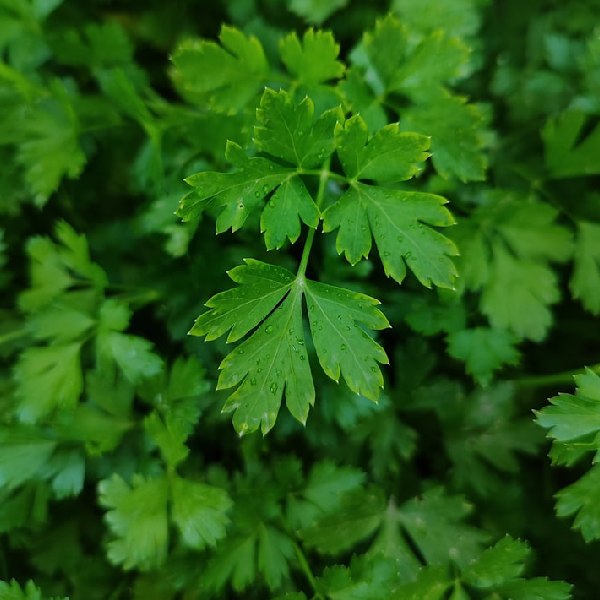
Parsley is a green leafy herb that comes from the Petroselinum crispum plant. It is used to garnish and season other dishes. It is a medicinal herb with lots of health potential. Parsley has a fresh peppery taste and is rich in vitamins, minerals, and antioxidants. This plant is good for digestion and immunity.

Types of Parsley

  • Curly leaf parsley – It has a mild flavour and is used as a garnish.
  • Flat leaf parsley (Italian parsley) – Comes with a stronger taste and preferred for cooking
  • Hamburg parsley – Grown mainly for its edible root.

Nutritional Value of Parsley

Parsley is low in calories and rich in minerals. Here’s the nutrition profile of 100g of parsley.


Nutrient Amount
Calories 36
Total Fat 0.8 g
Cholesterol 0 mg
Sodium 56 mg
Potassium 554 mg
Iron 5 g
Carbohydrates 6 g
Protein 3 g

Culinary Uses of Parsley

  • Used as a garnish for soups, salads, and main dishes.
  • Added to sauces and dressings.
  • Used in pasta, rice, and vegetable dishes.
  • Used in herbal butters and dips.

What is Parsley called in different languages?

Parsley in Hindi

Parsley in Hindi is called Ajmoda ke Patte.

Parsley in Tamil

Parsley in Tamil is called Parsley Ilai (பார்ஸ்லி இலை).

Parsley in Telugu

Parsley in Telugu is called Parsley Aaku (పార్స్లీ ఆకు).

Parsley in Kannada

Parsley in Kannada is called Parsley Soppu (ಪಾರ್ಸ್ಲಿ ಸೊಪ್ಪು).

Parsley in Bengali

Parsley in Bengali is called Parsley Pata (পার্সলে পাতা).

Parsley in Malayalam

Parsley in Malayalam is called Parsley Ila (പാർസ്ലി ഇല).

Parsley HSN code

  • HSN 071290 – Dried parsley, flakes, or rubbed parsley
  • HSN 121190 – Parsley leaves or herbs used for medicinal or aromatic purposes
  • HSN 12119029 / 12119090 – Processed parsley (powdered or specific forms)
  • HSN 120991 – Parsley seeds used for sowing

Frequently Asked Questions

No, parsley and coriander are not the same. They belong to the same plant family but differ in taste, aroma, appearance, and uses.

Parsley in Hindi is called Ajmoda ke Patte or simply known as Parsley. It has no traditional Hindi name.

No, parsley is not celery. However, both belong to the same plant family, Apiaceae. Parsley is an herb a celery is a vegetable.