Short Description

What is Sunflower Seed?

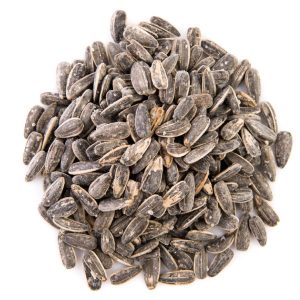
Edible sunflower seeds come from sunflower heads. They are small, spherical, and high in nutrients. These seeds give you protein, healthy fats, and essential health compounds.

The seeds are first seperated from the flowers and then sun-dried to remove the moisture. It can be consumed raw or roasted as a snack item and added to cooking recipes. Also, sunflower oil is produced from the seeds, a popular choice for its beautiful flavour.

Sunflower seeds provide essential nutrients for overall health and have several health benefits, such as vitality, immunity, and heart protection.

How is Sunflower Seed cultivated?

Sunflower seeds are grown after the direct soil sowing. These trees need full light and mild rainfall. The crop grows well in warm circumstances with enough spacing.

The soil should be prepared using organic compost or fertilizers, regular watering, pest control, and weed management. These are required to ensure strong growth and the production of superior seeds.

Sunflowers start to bloom about 70 to 100 days. When the seeds are ready, sunflower heads are gathered, dried, and processed for further use.

Product Description

Benefits of using Sunflower Seeds

  • Packed with healthy fats, protein, and fiber
  • Supports heart health, lowers cholesterol
  • Provides vitamins E and B-complex
  • Boosts immunity and antioxidants
  • Aids digestion and gut health
  • Promotes healthy skin and hair
  • Increases energy and stamina

How to use Sunflower Seeds?

  • Eat raw or roasted as a snack
  • Sprinkle on salads, oatmeal, or yogurt
  • Add to baked goods
  • Blend into smoothies
  • Use in granola bars or trail mixes
  • Press to make sunflower oil
  • Mix with cereals or rice dishes

What is Sunflower Seed?

Edible sunflower seeds come from sunflower heads. They are small, spherical, and high in nutrients. These seeds give you protein, healthy fats, and essential health compounds.

The seeds are first seperated from the flowers and then sun-dried to remove the moisture. It can be consumed raw or roasted as a snack item and added to cooking recipes. Also, sunflower oil is produced from the seeds, a popular choice for its beautiful flavour.

Sunflower seeds provide essential nutrients for overall health and have several health benefits, such as vitality, immunity, and heart protection.

How is Sunflower Seed cultivated?

Sunflower seeds are grown after the direct soil sowing. These trees need full light and mild rainfall. The crop grows well in warm circumstances with enough spacing.

The soil should be prepared using organic compost or fertilizers, regular watering, pest control, and weed management. These are required to ensure strong growth and the production of superior seeds.

Sunflowers start to bloom about 70 to 100 days. When the seeds are ready, sunflower heads are gathered, dried, and processed for further use.

Introduction

Sunflower seeds are nutritious edible seeds obtained from the sunflower plant. They are rich in healthy fats, protein, vitamins, minerals, and antioxidants. There is multiple option to have it – raw, roasted or as sunflower oil. It is good for heart health, immunity, skin health, and as part of a balanced diet.

Sunflower seeds benefits for females

  • Good for hormonal balance due to vitamin E and healthy fats.
  • Improve skin health and delay signs of aging.
  • Strengthen bones with magnesium and phosphorus.
  • Help manage PMS symptoms.
  • Support heart health and reduce inflammation.

Sunflower seeds benefits for males

  • Good for muscle growth with plant-based protein.
  • Improve heart health and circulation.
  • Boost energy levels with B vitamins.
  • Support testosterone function through zinc.
  • Help reduce oxidative stress and fatigue.

Uses of Sunflower seeds

  • Consumed as a healthy snack.
  • Added to salads, cereals, and smoothies.
  • Used in baking and cooking.
  • Extracted for sunflower oil.
  • Used in energy bars and health foods.

Side effects and risks

  • High-calorie intake is not good for weight control.
  • Excess sodium in salted seeds can raise blood pressure.
  • Overeating of this can cause digestive discomfort.
  • Possible allergic reactions in some people.
  • Excess intake may lead to mineral imbalance.

What are Sunflower Seeds called in different languages?

Sunflower Seeds in Hindi

Sunflower Seeds in Hindi are called Surajmukhi ke beej (सूरजमुखी के बीज).

Sunflower Seeds in Tamil

Sunflower Seeds in Tamil is called Suriyakanthi Vidhai (சூரியகாந்தி விதை).

Sunflower Seeds in Telugu

Sunflower Seeds in Telugu is called Poddu Thirugudu Ginjalu (పొద్దుతిరుగుడు గింజలు).

Sunflower Seeds in Kannada

Sunflower Seeds in Kannada is called Surya Kanti Beeja (ಸೂರ್ಯಕಾಂತಿ ಬೀಜ).

Sunflower Seeds in Bengali

Sunflower Seeds in Bengali is called Surjomukhi Beej (সূর্যমুখী বীজ).

Sunflower Seeds in Malayalam

Sunflower Seeds in Malayalam is called Sooryakanthi Vithu (സൂര്യകാന്തി വിത്ത്).

Sunflower Seeds HSN code

  • 12060010: Sunflower seeds for sowing or planting.
  • 12060090: Other sunflower seeds, generally used for oil extraction or human consumption.

Frequently Asked Questions

Sunflower seeds can be eaten raw, roasted or soaked. Consume it after mixing it in salads, smoothies, cereals, snacks.

Plant sunflower seeds 1-2 inches deep in soil with good sunlight. Water the saplings regularly. Seeds usually germinate within 7-10 days under warm conditions.

Sunflower seeds are calorie-dense and high in healthy fats. Try to have it in controlled quantities, do not over intake this.

Yes, sunflower seeds can be eaten daily in small amounts. They provide healthy fats, vitamins, and lots of minerals. But overeating can cause excess calorie and sodium intake.